Interview
Itinéraires singuliers podcast - From the trading floor to sake breweries: Sébastien Lemoine’s rediscovered sense of purpose
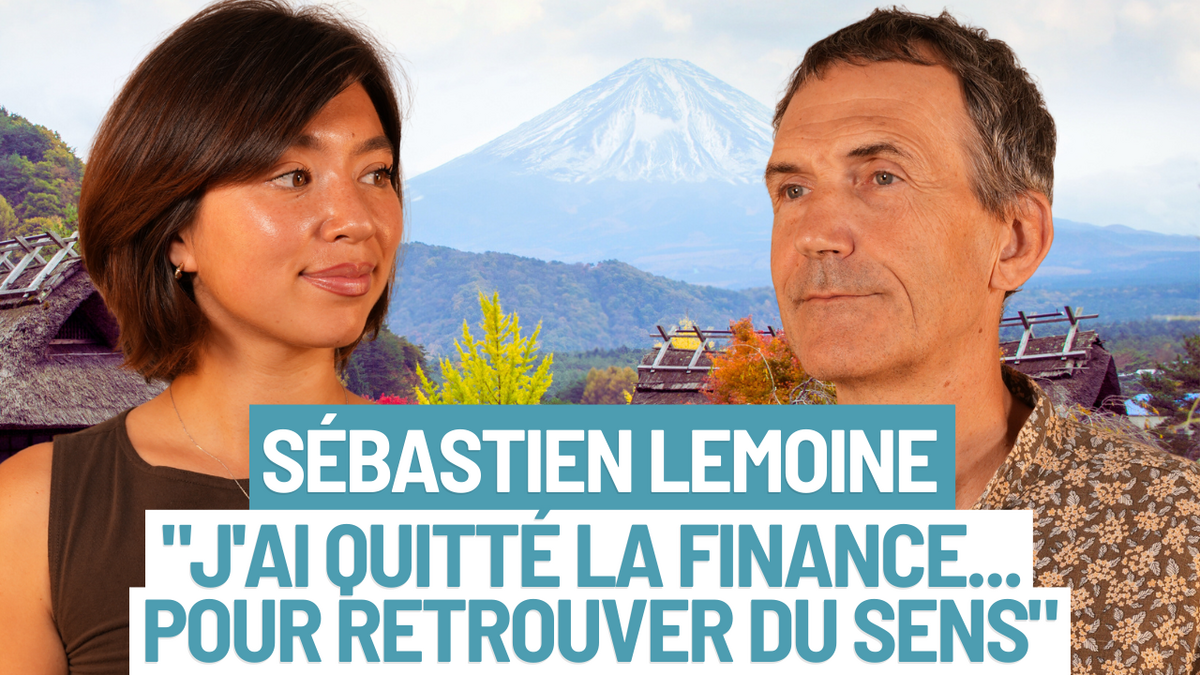
Leaving a well-established career in international finance to turn to Japanese sake may seem like a radical shift. For Sébastien Lemoine, it is above all the culmination of a quest: finding meaning again. That is the word he chooses to sum up his journey. After years on trading floors, in a demanding environment sometimes dominated by greed and performance, he realizes his energy is gradually fading. The shock of the global financial crisis, followed by the Tohoku disaster in 2011, accelerates his reflection.
Japan is a country he has known for a long time. He first came in 1986 as a student, drawn by the language and the culture. He then returned regularly, eventually settling there for extended periods. He has seen the country evolve, age, and change pace. What was once a very young, vibrant Japan - onsen full of children, overflowing energy in Roppongi - has given way to an older society. Yet his attachment has only grown stronger. He walks, cycles, crosses countryside and cities, and finds in this close relationship with the country a form of obviousness, almost a feeling of being “where he belongs”.
It was from 2008 that he truly discovered Japanese sake. Not generic sake, but carefully crafted bottles rooted in a culture of long-term commitment. Japanese craftsmanship, he says, is not just a profession but a path. One strives for a perfection that is never fully reached, but approached by integrating each year’s experience, variations in climate, rice, and microorganisms. He cites the Kenbishi brewery in Kobe, which claims continuity across centuries and blends each year sakes drawn from a fifty-year stock to maintain a consistent taste profile despite natural changes.
In a context where sake consumption has fallen by fourfold in fifty years and many breweries struggle to find successors, Sébastien chooses a different role: neither producer nor trader, but a transmitter. He creates Passerelle, a company whose name reflects its mission: building a bridge between Japanese producers and international audiences. He teaches at Le Cordon Bleu and Temple University, guides enthusiasts, and introduces this world through education and tasting.
The welcome he receives in sake breweries surprises him. He expected more reserve. Instead, he encounters artisans proud of their heritage yet deeply humble, often facing economic difficulties. He recalls a visit in Chiba where a producer, to mark their exchange, opened for him and a friend a bottle from 1952, her year of birth. This generosity, he often finds, emerges when he shows genuine interest and a serious understanding of the product.
Nothing was instantaneous, however. In Japan, legitimacy comes through expertise. Moving from a field where one is an expert to another where one is not yet requires learning, understanding processes, categories, and practices. This in-depth work, combined with recommendations and the trust of certain producers, gradually opens the doors of the industry to him.
His contribution also lies in an external perspective. Where sake breweries often present their product from a technical angle - water, rice, know-how - he emphasizes the tasting experience and food pairings. Drawing on his French culture of food and wine pairing, he proposes new approaches: sake with Western cuisine, sake with cheese, sake served not merely as an accompaniment but as an element that directly interacts with the dish. He sees this as a way to renew interest in a declining market.
He finally recalls the cultural and symbolic dimension of sake, down to the objects that accompany it, such as the masu - the small wooden box once used to measure rice and from which sake is drunk during ceremonies or inaugurations. Simple gestures that tell part of Japan’s story.
Sébastien Lemoine’s story is not one of a spectacular career change, but of a transition patiently shaped over the years. That of a man who found in sake a space where culture, technique, and transmission meet. And who, after more than twenty-two years living in Japan, continues to build this bridge between a Japanese tradition and an audience learning to discover it differently.
Passerelle website:https://passerelle-s.com/
Sébastien is also host of the podcast “Sake on Air”: https://sakeonair.com/category/episodes/
- Watch the full episode of Itinéraires Singuliers: Itinéraires singuliers podcast - From the trading floor to sake breweries: Sébastien Lemoine’s rediscovered sense of purpose on Youtube
- Available on APPLE PODCASTS | SPOTIFY | DEEZER | AUSHA| AMAZON MUSIC and many other listening platforms – subscribe so you don’t miss an episode!
- ⭐If you enjoyed this episode, please leave a rating or review: it really helps others discover the podcast!

This podcast is produced in collaboration with Anna